
Scotch Plains Resident Lookup Records
No official database is a complete roll of every Scotch Plains resident. Use the record that answers the narrow question in hand, then seek a second source that tests the match. The annual property roll connects a name or entity to an assessed parcel. A voter check can confirm registration status subject to protected records. Court, vital, library, probate, license, and business records provide different kinds of dated context. They should never be merged into a claim of current residence without supporting evidence.
| Record | What it can confirm | Where | Access |
|---|---|---|---|
| Annual property roll | Owner or entity association with a parcel | NJ Property Explorer and assessor | Annual public data; protected details may redact |
| Recorded deed index | Ownership transaction and parties | Union County Clerk | Name-indexed; older images may need Record Room help |
| Voter registration check | Registration status and jurisdiction detail | NJ SVRS and Union County route | Limited public result; protected fields withheld |
| State court docket | Public case connection, status, and disposition | NJ Courts | Coverage varies; confidential matters excluded |
| Vital or obituary source | Historical family event or death lead | DOH, Archives, and library resources | Current certified copies restricted |
| Probate, business, or license record | Estate role or public affiliation | Surrogate, DORES, and MyLicense | Not proof of a home address |
The New Jersey Property Explorer allows location, owner, block, and lot research where the portal offers those fields. Capture the dated owner, situs, block and lot, classification, assessed land and building values, and prior-year tax. Annual data can lag a transfer. A mailing address, when shown, is not the same thing as the situs, and neither proves who occupied the parcel on a particular day.
Starting a Scotch Plains Resident Lookup
Normalize the name before using an index. Keep legal first and last names, initials, former or married surnames, suffixes, the likely municipality, and only an approximate age when it is lawfully known. Search the property result and the Union County Clerk land index separately. The land index is keyed to party names, not street addresses. If a parcel result identifies an owner, search the acquisition deed by that party name and compare the recording date and legal description.
A property result is an association, not an occupancy finding. The owner may have a different mailing address, the record may be annual, and a more recent deed may not yet appear in the tax data. For a historical person rather than an owner, use a dated directory, newspaper, yearbook, census, or obituary. The Scotch Plains Directory Book has the verified regional directory collections and the method for pairing editions with census years.
Note: Preserve the portal access date, tax year, deed recording date, and the exact name form, because each result can change at a different time.
Reading Scotch Plains Court Lookup Results
The New Jersey Courts public search is the state entry for civil, criminal, judgment-lien, tax, and municipal case categories. In Case Jacket, Party Name mode distinguishes an Individual from a Business. Individual searching uses last name, first name, and an optional middle initial, alongside the CAPTCHA. The official guide says a name with two or fewer characters is exact-only, while three or more characters can broaden the result. A response stating no records found can signal a search mismatch, not a conclusion about the person.
For a local ticket or complaint, NJMCDirect is the own-case route rather than a general resident-name search. For state cases, compare municipality, filing date, party role, attorney, docket number, case type, and final disposition. A complaint is not a conviction, and a docket connection does not establish residence or identity. Juvenile, sealed, expunged, adoption, confidential family, and protected-victim material remain outside ordinary public access.
The NJ Courts public-search landing page is the source for this Case Jacket image.
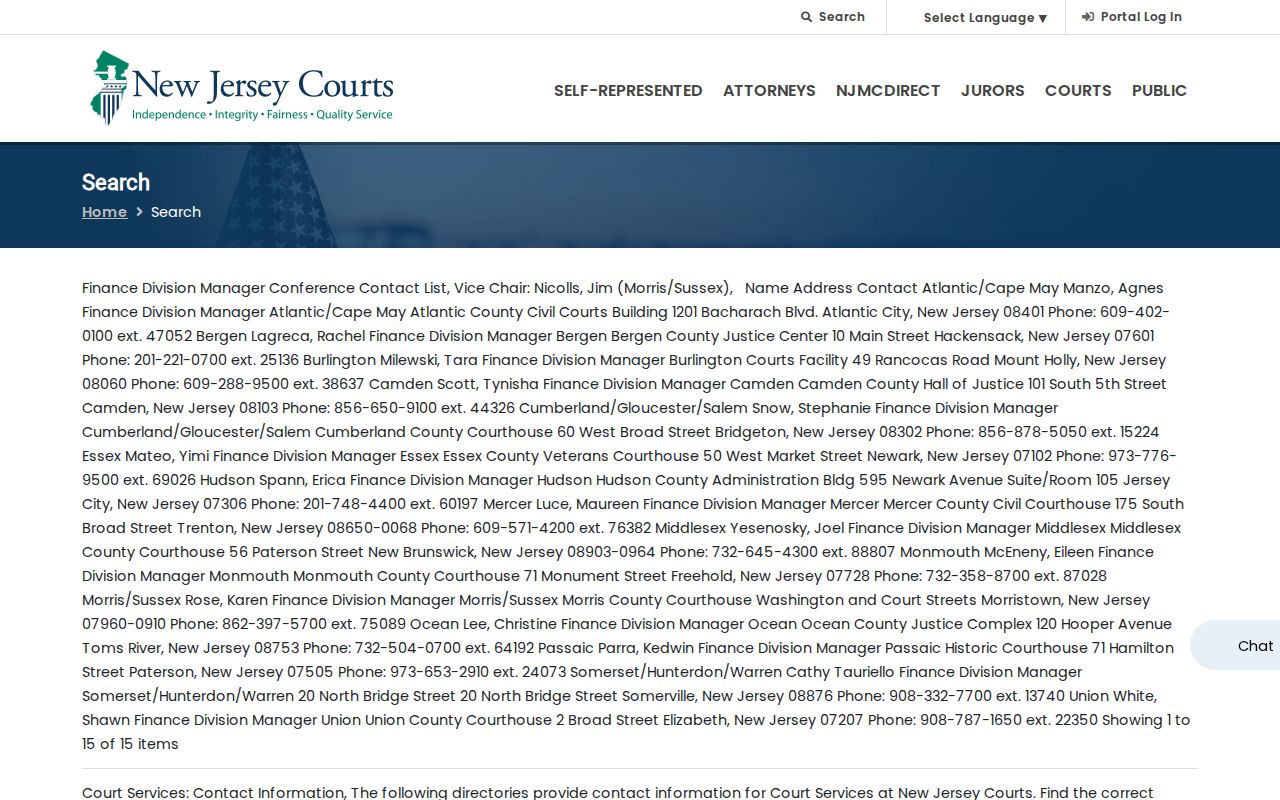
The public route is useful for a focused match, while the display and availability of orders, motions, proceedings, and dispositions depends on the case type and system.
| Docket or case number | The court’s identifier for the matter |
|---|---|
| Case type and caption | The category and public party caption that distinguish similar names |
| Party role | Whether the person appears in an individual or business result and their stated role |
| Status and filing date | The procedural state and timing, when displayed |
| Docket entries | Public event dates, filing descriptions, orders, or motion dispositions where available |
| Result count or no-result message | Useful search context that should be retained with the query terms |
Older or fuller court work has other channels. The Electronic Access Program provides narrower paid system access at $4 per minute, one screen at a time, without downloads. Civil Judgment/Order information is statewide from 1984; pre-February 1984 material is manually indexed and needs court-staff assistance. Federal cases use PACER. For a closed file or copy request, use the court records and SCCO route, which applies Rule 1:38 access limits.
Scotch Plains Vital Record Verification
The Scotch Plains local registrar is the local certified-record route for events registered in the township, but it does not publish an unrestricted online name index. The New Jersey Department of Health ordering hub provides online, mail, and status-check paths. An applicant selects a certified legal copy or a plain informational or genealogical certification, then follows the active form for identity, eligibility, and fee instructions. Current fees vary by record and order route, so the active form is controlling.
A certified copy is security paper with a raised seal for legal or identity uses. An informational certification is plain and does not establish identity. A death certification excludes the Social Security number and medical cause-of-death terms. Certified-copy eligibility is principally governed by N.J.S.A. 26:8-62 and can depend on the subject, relationship, legal authority, government role, court order, or an emergent circumstance. A marriage certificate records a marriage event; it is not a divorce decree, which is a Superior Court record.
The DOH vital-record ordering page is the source for this resident-lookup image.
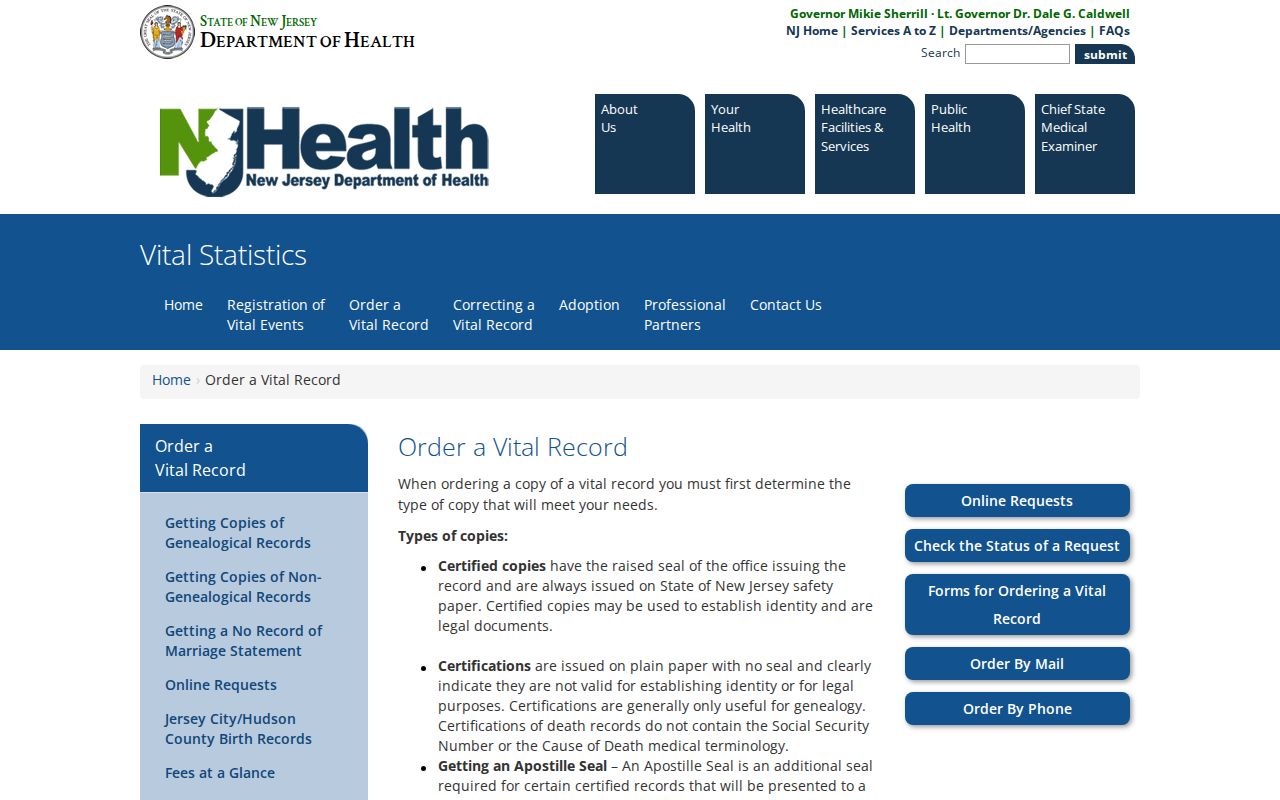
The ordering distinction matters because a genealogy lead and a legal copy serve different purposes and follow different eligibility rules.
Older material uses a separate genealogy route. Current DOH guidance describes birth records for a deceased person more than 80 years old, marriage material more than 50 years old, and death material more than 40 years old, with displayed date runs that should be checked at request time. State Archives can hold older records after the Department’s holding period. Adult adoptees and birth parents must use the DOH adoption framework or the DCF Adoption Registry’s authorized process. Original adoption records are sealed, and the registry offers non-identifying information and limited mutual-consent search rather than an informal birth-family directory.
Verifying a Scotch Plains Resident Across Records
A one-person check should move from a narrow, dated result to an independent record, not from one broad name result to a conclusion. The best pair depends on the question. A current parcel association can be compared with the newest recorded deed. A historical directory address can be tested against a census or newspaper. A public court result needs its docket details and final disposition. Each step should preserve source date, location, and the exact field that matched.
- Write down the full name, spelling variants, municipality, and one dated fact such as an address, family relationship, or prior record year.
- Check the official voter route for exact name and requested matching fields, or search the property roll if the starting fact is a parcel.
- Compare the result with a recorded deed, public docket, obituary, directory, or probate file that matches the date and municipality.
- For a vital event or closed court record, request the appropriate copy from the custodian only if the record’s eligibility rules allow it.
- Stop when records conflict, are redacted, or use a protected substitute address. Record the conflict rather than forcing a match.
- Docket
- A court’s case identifier and event history, used to distinguish one matter from another.
- Index versus image
- An index supplies a searchable pointer; the actual image or copy provides the context and may have separate access rules.
- Certified copy
- An official custodian’s authenticated record copy, distinct from an informational or research copy.
- Disposition
- The court’s recorded outcome or current procedural status, which should not be guessed from an accusation alone.
Scotch Plains Resident Lookup and Voter Records
Use the New Jersey voter-registration check for one person’s registration status, with the exact name and the portal’s requested date-of-birth, county, and municipality fields. The Union County route points to the same purpose. Hyphens, spaces, married-name changes, middle initials, nicknames, and county spelling can all affect a match. A no-result response can reflect those issues, an inactive or removed status, a protected record, or a different jurisdiction.
N.J.S.A. 19:31-39 allows county voter-list access only within its stated limits. Signatures, Social Security numbers, driver-license or non-driver ID numbers, and protected addresses are withheld. It also does not reveal how a person voted. A full list is not the same product as the individual status check. For a formal list or historical snapshot, the Union County Board of Elections uses an OPRA request form that identifies delivery choice, record description, maximum cost authorization, and other request details. Ask for the specific non-exempt record or inspection needed, not an undefined bulk file.
Scotch Plains Resident Lookup Affiliations
Business and license records can confirm a public affiliation, credential, or filing role, but neither identifies a person’s home. The New Jersey Business Name Search uses a business-name keyword or entity ID. Related records services can provide status, standing, documents, trade names, and UCC material. A status report may show an agent, principal business address, management name, filing date, or entity status. A UCC filing is a financing notice, not a home-ownership record.
MyLicense has Person Search and Business Search modes, with profession, license type, first or middle name, last name, license number, and city fields. A name search needs at least two characters when that search choice is used. Retain the license type, number, status, and verification date. A Scotch Plains city filter or a business address is not proof that the licensed person lives in Scotch Plains.
The MyLicense verification service is the source for this resident-lookup image.
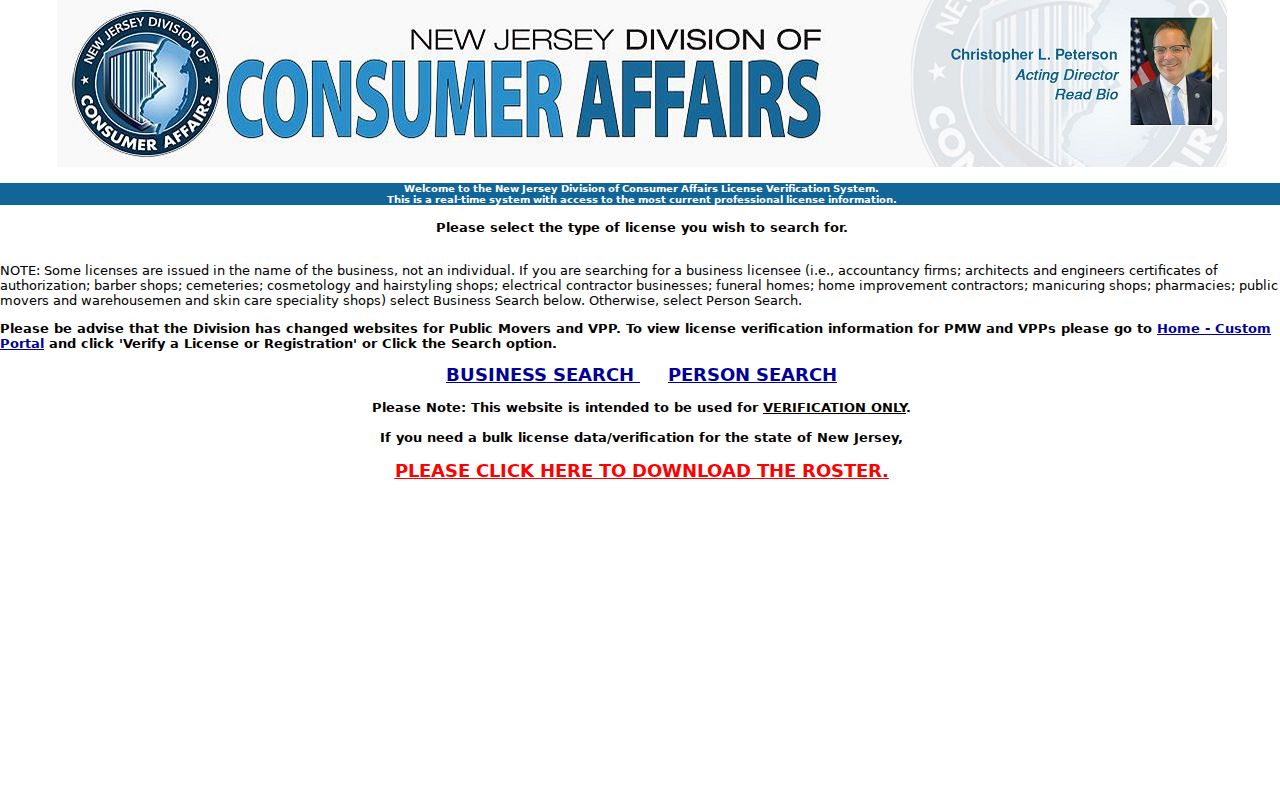
Verification status is a public credential detail, best recorded with the date and license type rather than recast as a personal-address finding.
Scotch Plains Resident Lookup Prior-Address Leads
New Jersey Treasury’s unclaimed-property search is free and can provide a possible prior name or address lead. A matching entry is not current whereabouts and does not establish identity. The claimant must supply proof through the state’s process. Pair any result with an official dated record, such as a deed, obituary, probate file, or historical directory, before relying on it for a family-history or estate question.
The New Jersey unclaimed-property search is the source for this resident-lookup image.
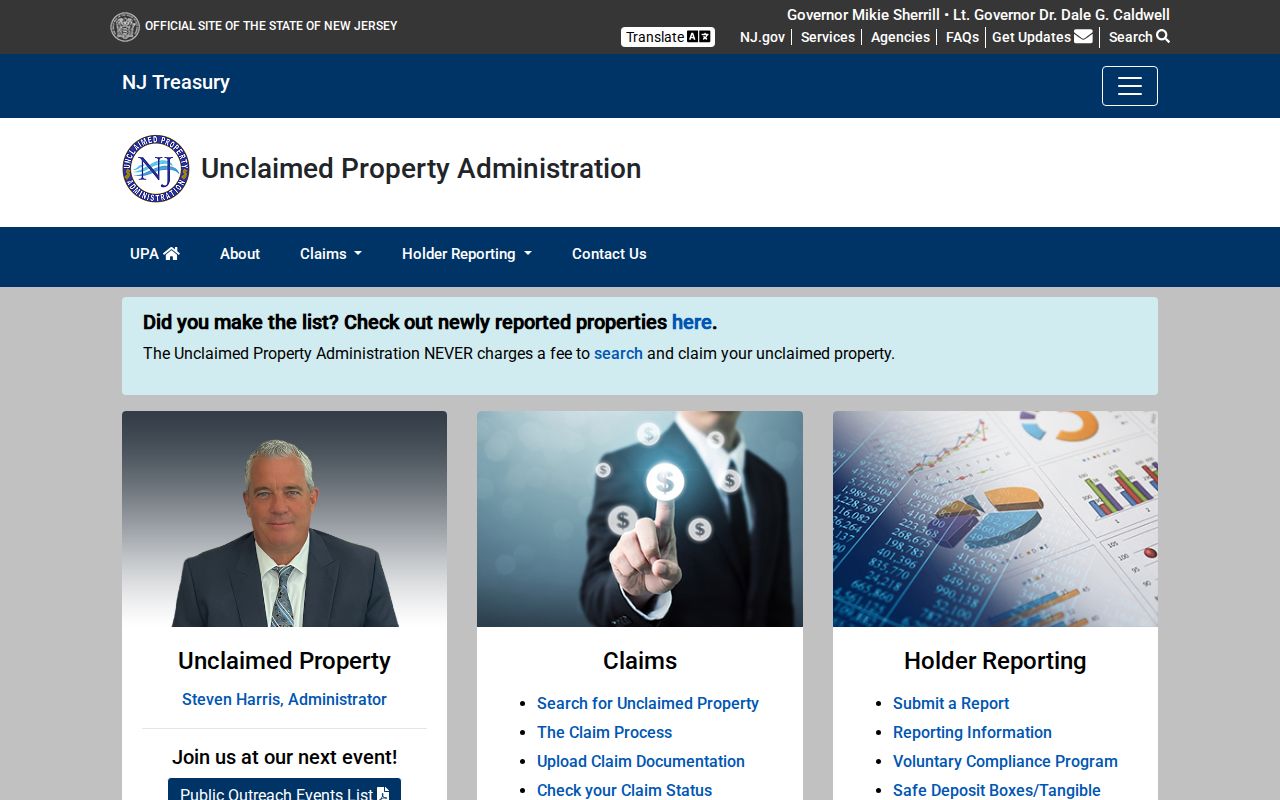
The state describes its search and claim process as free, so requests for advance payment to locate a name or claim should be treated with caution.
Scotch Plains Resident Lookup Privacy Limits
New Jersey OPRA does not open every field in a government record. Agencies may redact Social Security, bank and card data, month and day of birth, personal email or telephone, driver-license information, minors’ identifying details, signatures, and protected addresses. A request should ask the right custodian for the non-exempt part of a record and accept lawful redactions. The original custodian also handles corrections: the assessor for tax-card issues, the County Clerk for index issues, the Board of Elections for voter records, and the court clerk for a case-index question.
The Address Confidentiality Program supplies a substitute legal address for qualifying people, and Daniel’s Law protects the addresses and unlisted phone numbers of covered public officials and immediate family. A substitute or redacted address is the endpoint of the search. It is not an invitation to reconstruct a physical location. Court Rule 1:38 adds separate limits for confidential court material, including sealed, juvenile, expunged, adoption, and family records.
Lawful use. Use public record details for a lawful personal purpose and handle them with care. Do not use a name, address, or record result to stalk, harass, intimidate, or harm another person.
Scotch Plains Resident Lookup Fallbacks
When an official index does not answer the question, identify the agency that actually holds the record. The township clerk is the municipal doorway for minutes, record books, contracts, deeds, bonds, and archives. The municipal court or state court staff handle court copies. The assessor can clarify a property record card, and the County Clerk Record Room fills gaps in online land images. Older local research can move to newspaper databases, FamilySearch affiliate access, yearbooks, the Historical Society, or the Union County Historical Society.
A precise request gives the custodian a record type, name or street, approximate date range, and a preference for inspection before copies. The New Jersey OPRA Citizen’s Guide explains the state request process and exemptions. Online deed imaging is incomplete for older records, municipal permits have no public name-search portal, and library resources can have license limits. Those access boundaries are reasons to use the proper fallback, not reasons to infer a missing fact.
Note: An absent result can mean a mismatch, an unindexed collection, a legal restriction, or a record held by a different custodian.