
Scotch Plains Previous Residents by Era
One address needs more than one source. Union County land records identify recorded parties and the legal description behind a parcel. Directories and census schedules help identify households, while maps date the building and newspapers can add a dated family clue. The columns below keep those roles separate. A directory hit is not title proof, and a deed proves a transfer rather than who slept at the address.
| Record trail | Period available | Custodian or route | Useful evidence |
|---|---|---|---|
| County land records | Record Room, 1857 to present; online index inspected through August 25, 2026 | Union County Clerk | Deed parties, recording date, instrument, book/page, legal description |
| Wand's regional directories | 1903 to 1916 identified; check each edition | State Library inventory and Plainfield holdings | Name and address snapshots |
| NARA Plainfield-area directories | 1929 to 1930, 1931, and 1933 | National Archives holdings | Early-1930s household clues |
| Sanborn maps | 1910, 1924, and 1933 context | Library of Congress and Princeton index | Building footprint, use, and street layout |
| Federal census | Decennial, subject to release rules | NARA, FamilySearch, and library databases | Household at the enumeration date |
Begin with the current parcel because it supplies the bridge to names. Then use the date in question to decide whether land, directories, maps, or census material has the best chance of answering it. For a historic address section and its editions, the Scotch Plains Directory Book gives the collection details without turning a historical listing into a current record.
Scotch Plains Parcels Start the Trail
The New Jersey Property Explorer can search by location, owner, county, municipality, block, or lot. Its annual data can show an owner, location, block and lot, classification, assessed land and building value, and prior-year taxes. The Scotch Plains assessor maintains property record cards and tax-map information, but the municipal page did not expose a dedicated public owner-search form. Ask for a card by exact situs address, owner, or block and lot when a public result needs confirmation.
Save the property data year. A post-filing transfer may not yet appear in annual assessor data. Also preserve the situs address, which is the physical parcel, separately from any mailing address. A mailing address can be a post-office box or a different place entirely. Block, lot, qualification, and the legal description are better keys when a street label has changed or a corner parcel has multiple address forms.
- Situs address
- The physical location assigned to the parcel for tax and map purposes.
- Grantor and grantee
- The grantor transfers an interest in a deed; the grantee receives it.
- Chain of title
- A reconstruction of successive recorded transfers for the same parcel, not a legal title opinion.
- Legal description
- The block, lot, subdivision, or metes-and-bounds description used to identify land beyond its street address.
Note: Label every result with its tax year, deed date, directory edition, map year, or census date before comparing it with another source.
Scotch Plains Deed Index Bridge
The Union County Clerk Official Land Records index is keyed by party name rather than street address. Its own help directs address researchers to identify an owner through tax-board information first, then return to the land index. The online system was inspected through August 25, 2026. It offers Name, Date Range, Book/Page, and Instrument Number searches, so a known recording reference can rescue a search when a name is misspelled.
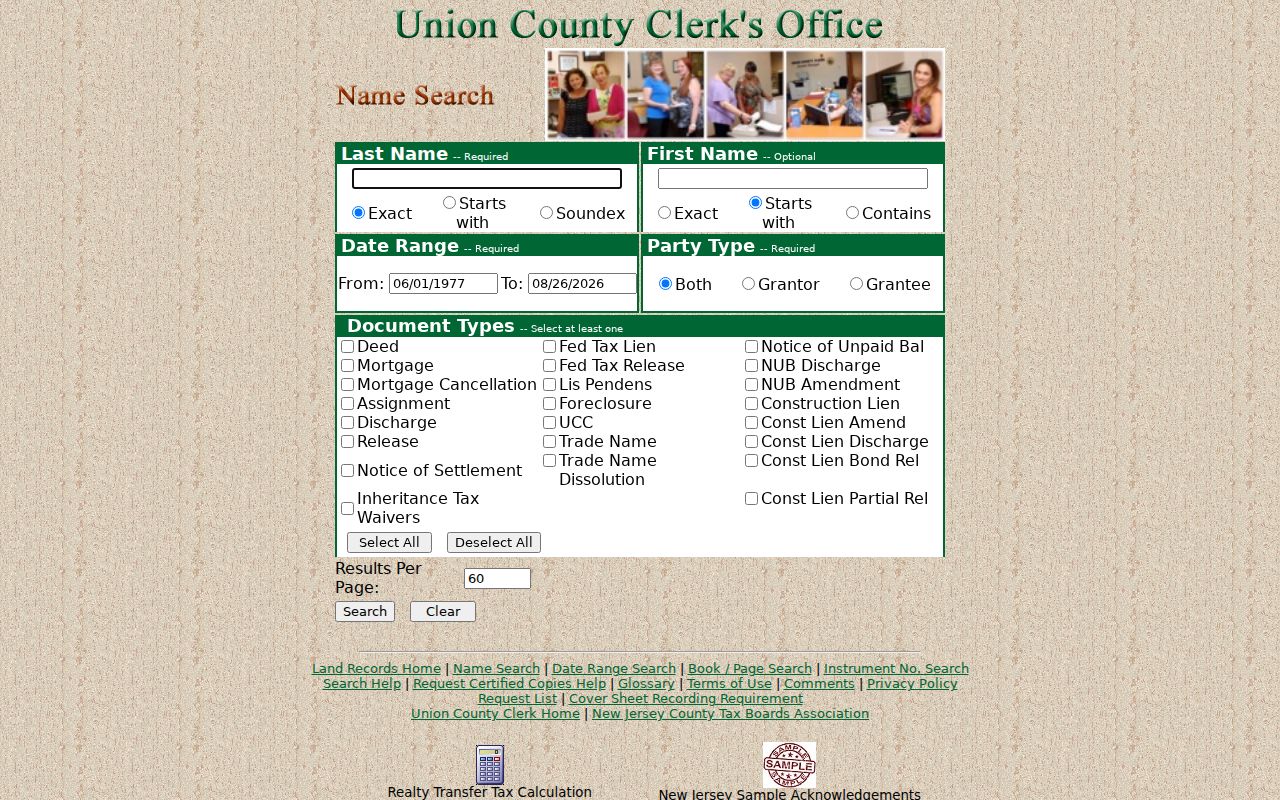
Name search requires a last name, date range, party type, document-type selection, and results-per-page field. Exact, Starts with, and Soundex matching help with variations. Choose Deed when building the ownership trail. Mortgages, releases, liens, foreclosures, and inheritance-tax waivers may supply context, but they do not replace a deed as evidence of a transfer.
A County Clerk name-search screen shows the choices that turn a property result into a recorded-document search.
Use the index to capture the instrument number, recorded date, book and page, image availability, and legal description. Those fields make the next backward step reproducible.
Trace Previous Residents Through Deeds
A deed chain follows recorded owners backward from the person now tied to the parcel. It does not, by itself, establish every prior resident. Keep a separate note for each owner, date, parcel identifier, and source. That separation prevents an estate, trust, or out-of-town tax contact from being mistaken for a past household.
- Find the current owner and preserve the Scotch Plains parcel's block, lot, qualification, and legal description.
- Search that owner as a grantee in the Clerk index, select Deed, and use a suitable date range and name-match option.
- Open the candidate deed and record its grantor, grantee, instrument number, recorded date, book/page, and prior-reference language.
- Search that seller, now the grantor, as a grantee to locate the earlier acquisition and repeat the check for name variants.
- When a book/page or instrument number appears in the document, use that reference instead of relying only on names.
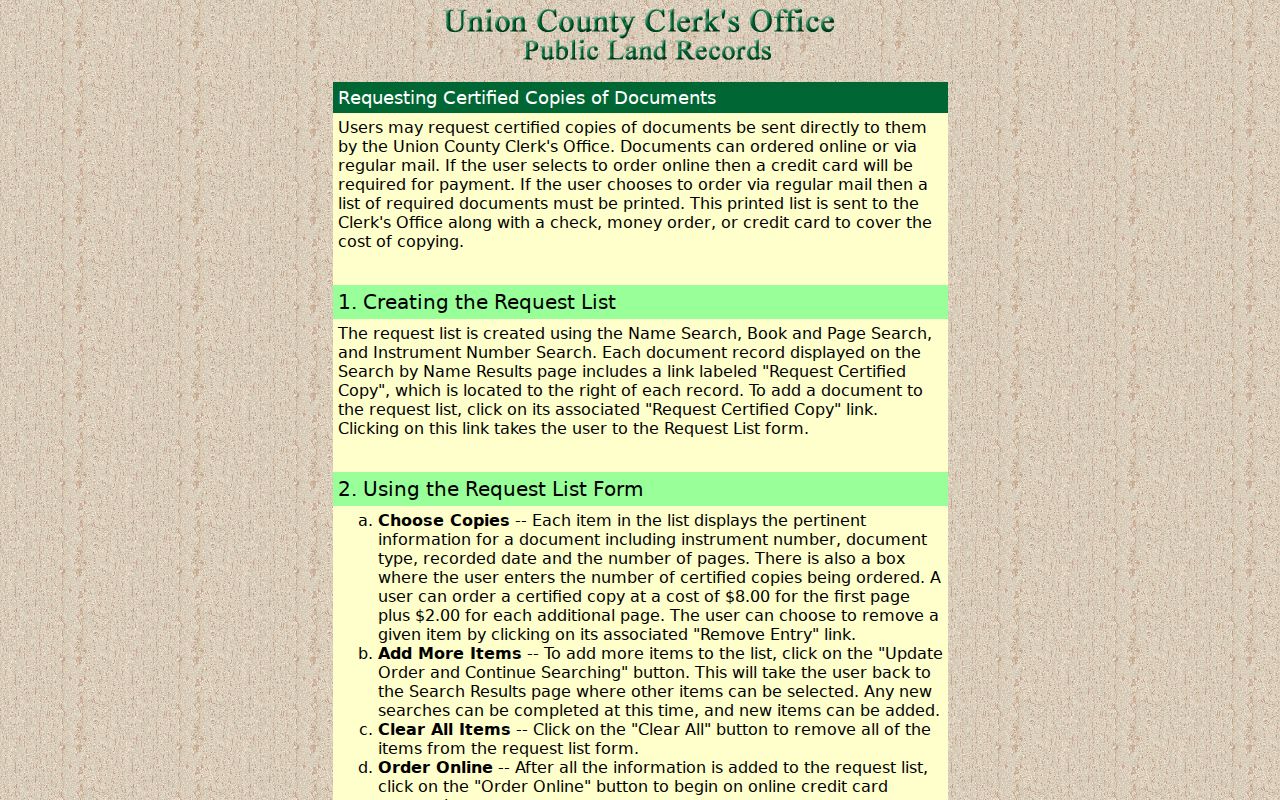
The results form a research trail, not a conclusion about marketable title. For a record needed as an official copy, the Clerk lets users add selected results to a request list. Certified copies cost $8 for the first page and $2 for each additional page. Ordering can be done online by card, or by mail with the printed list and the listed payment options. No verified processing-time promise was located.
A certified-copy request screen shows the page-count and copy-selection controls used after an instrument is identified.
Ordering only the identified pages is more precise than asking for every record attached to a surname.
Scotch Plains Pre-1986 Deed Images
The County Clerk's Record Room holds land transactions from 1857 to the present, while images for documents before January 1986 were still being processed online when the index was inspected. A name hit without an image is therefore not a dead end. Take the party name, date, book/page, instrument number, and legal description to the Record Room or ask the Clerk which access route fits the record.
Older research also benefits from historic place-name variants. Search Scotch Plains together with Scotsplain, Fanwood, Glenside Park, and Plainfield when an early directory or map heading does not use the current township wording. Validate any apparent match against the parcel or legal description rather than assuming similar names identify the same address.
The Scotch Plains-Fanwood Historical Society's title-of-ownership page for the Osborn Cannonball House offers a local model, not a substitute for a title search. Its published sequence moves from Israel Stevens in 1820 to Jonathan Osborn Jr. in 1829, Jethro Vermule in 1836, Jonathan Osborn Jr. again in 1841, Levi Hetfield in 1844, James Lynch in 1856, Elizabeth Osborn in 1857 and 1858, and William Brower in 1867. Those names show how a historic narrative can be tested in deed and newspaper research.
Sanborn Dates Scotch Plains Houses
The Library of Congress holds a ten-sheet Scotch Plains Sanborn set from 1924, and Princeton's official index identifies Scotch Plains sheets for 1910 and 1933. These maps are valuable for physical context: building footprints, uses, nearby structures, and the street grid can explain why an address appears differently in a directory or deed. They do not name residents or prove occupancy.
Pair a map year with a directory edition and a recorded instrument. A structure shown on a map may predate a later deed, while a directory can retain a former address after a move. The strongest date is the one that states what it measures, such as map year, recording date, or directory edition. Building permits can also date changes, but no public searchable Scotch Plains permit index was located; request address history from the building office rather than assuming an application equals completed work.
Scotch Plains Previous Residents in Directories
Owners are only part of a house history. Reverse, or criss-cross, directories run from address to occupant instead of from name to address. Ask the Scotch Plains Public Library about address-section volumes in the regional Plainfield, Fanwood, and Scotch Plains runs. The verified Wand's inventory covers 1903 to 1916 by identified editions, while NARA lists Plainfield-area volumes for 1929 to 1930, 1931, and 1933. Neither range should be treated as an unbroken annual series.
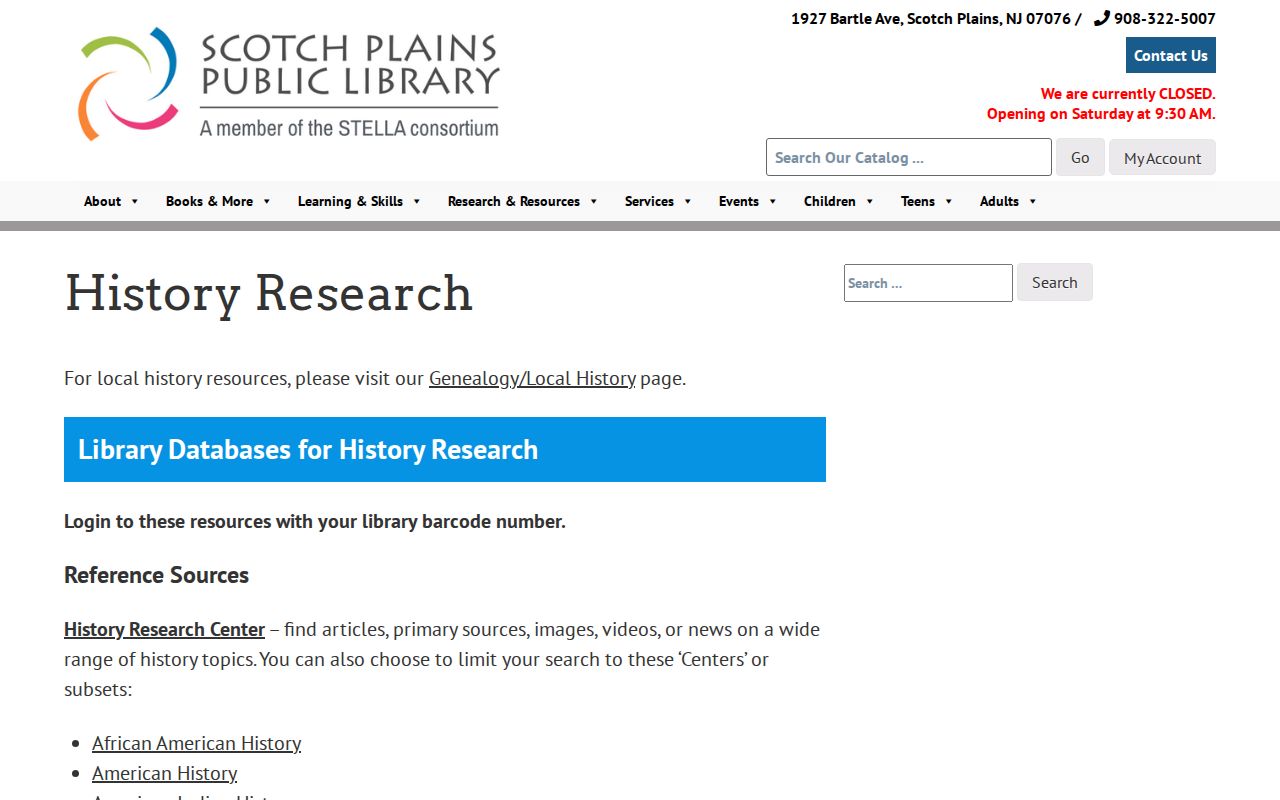
Use the library's local history and research resources to route an address, surname, street variant, or date to newspapers, yearbooks, FamilySearch access, or the Joint Digital Archives. The library's databases can supply newspaper context, but OCR can miss initials, hyphens, and place variants. A yearbook may support former-classmate research but is not a current-address record.
A Scotch Plains Public Library history-research page points researchers toward the local newspaper and archive routes.
Library material is most useful when every finding retains its edition, issue date, image number, or database citation.
- Find the street number in an address section and write down the occupant, spelling, nearby numbers, and edition year.
- Check the next available directory edition for the same number and compare spouse notation, occupation, and nearby entries.
- Pair the period with the nearest available census schedule, remembering that census access follows release rules and the 1950 census is open.
- Use a newspaper notice, obituary, deed, or probate record to corroborate a move, death, or family connection.
Scotch Plains Probate Trail Endpoints
An obituary can supply a death date, relatives, or an earlier address. Probate files can identify an executor, heirs, and other estate contacts, subject to access rules and redaction. The Union County Surrogate is the appropriate follow-up when a deed chain ends with a deceased owner or estate. It should be used to verify a successor, not to publish private family details.
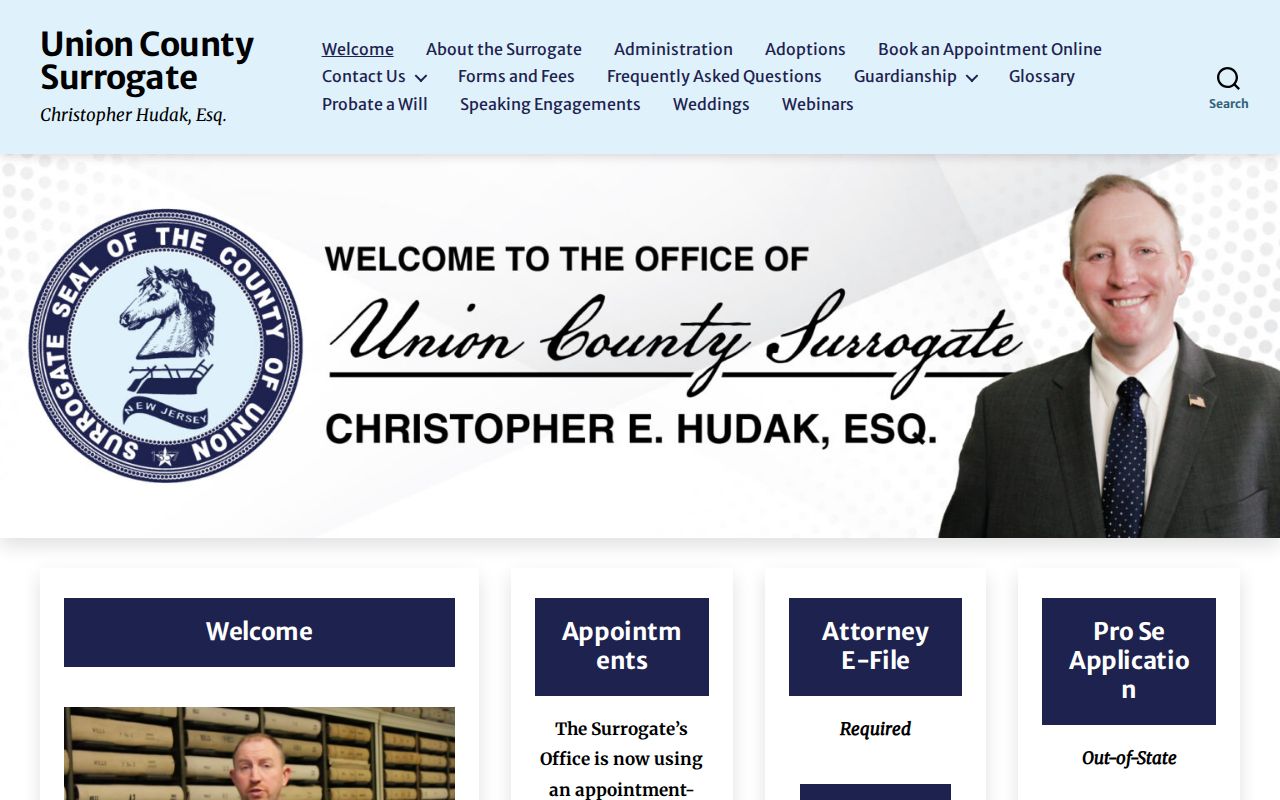
The Surrogate has a self-service records-room kiosk and a Westfield service point at the Colleen Fraser Building, 300 North Avenue East, available by appointment on listed days. Confirm current hours before travel. Kiosk copies use cash-only copy cards at $0.25 a page; staff plain copies are $3 a page, and the listed estate-search fee is $10. Those fees belong to the Surrogate route, not to the Clerk's deed-copy schedule.
A Union County Surrogate records-room page documents the office and service options for estate research.
Record the estate-file date and the office consulted, because probate access and fees are separate from land records.
Lawful Scotch Plains House History
Previous-resident research fits family history, property history, estate questions, and personal curiosity when it stays tied to dated public records. Treat a protected address or a substituted address as the end of the public trail. Do not try to infer a living person's location from gaps, relatives, parcels, or old notices.
Lawful use. Use Scotch Plains house-history records for personal, historical, or estate research. Do not use a past address trail to watch, harass, intimidate, or locate a protected living person.
Note: A deed chain, census entry, and directory listing become stronger only when their parcel, name, and source dates agree.